What eye surgery covers
Eye surgery at Booking Surgery falls into two broad groups. The first is refractive surgery, which corrects short sight, long sight and astigmatism so that you rely less on glasses or contact lenses. The second treats problems inside the eye itself, such as a clouded lens or a damaged cornea, to restore clear vision.
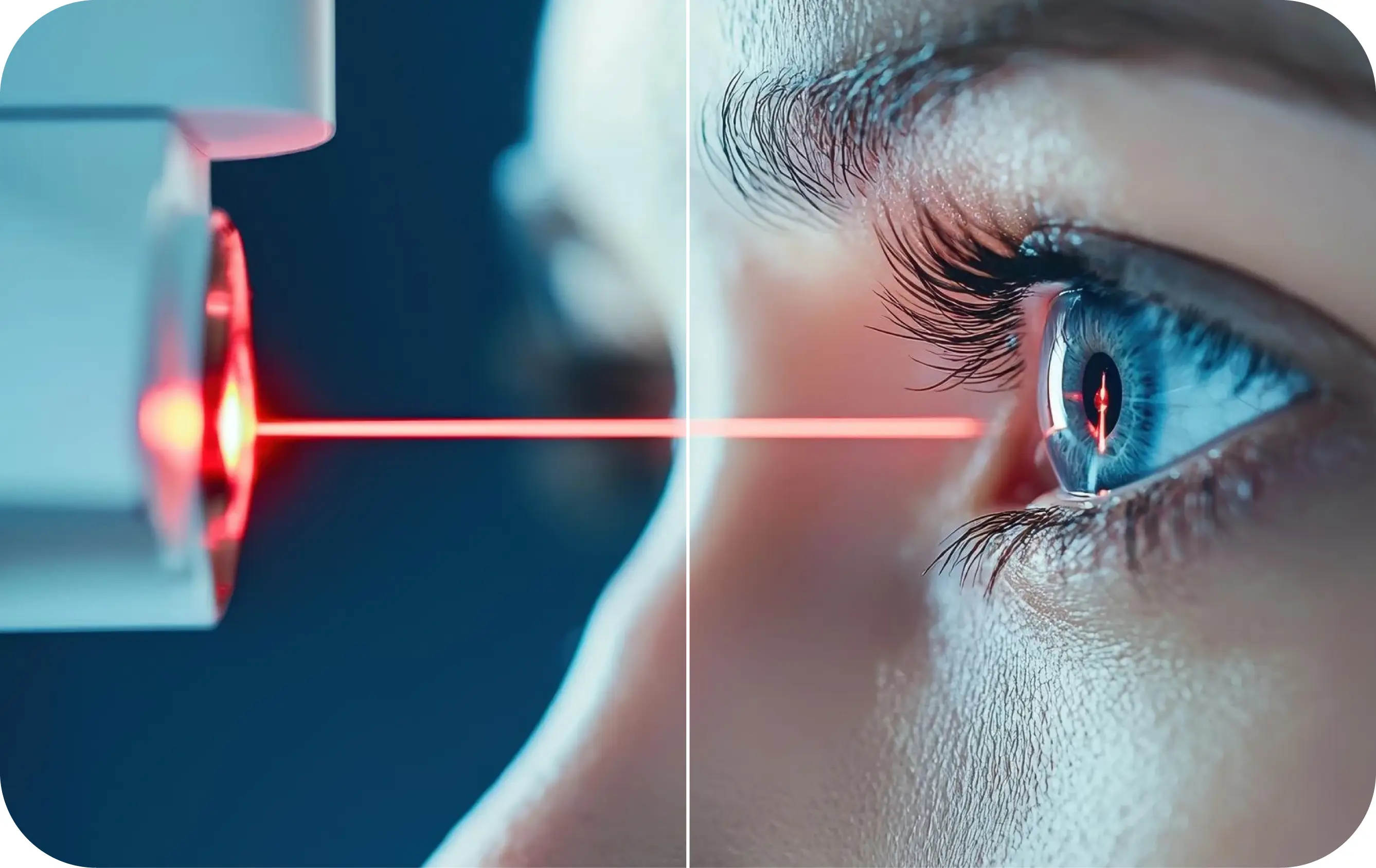
Laser vision correction is the treatment patients ask about most often. An excimer laser uses ultraviolet light, guided by a computer, to remove microscopic amounts of tissue from the cornea and change its curve. Modern lasers use a small, fast-moving beam and detailed maps of your eye, which gives a smoother surface and more precise correction. Depending on your eye, the surgeon may use LASIK with a laser-cut flap, a wavefront-guided treatment tailored to the fine irregularities of your eye, or PRK, where the laser works on the surface of the cornea without a flap.
Lens replacement removes the eye's natural lens and replaces it with an artificial intraocular lens. When the lens is cloudy this is cataract surgery; when it is clear but you want to correct your focus it is called refractive lens exchange. A cornea transplant replaces all or part of a damaged cornea with healthy donor tissue, and partial transplants are preferred where they are enough, because recovery is faster.
How to choose between treatments
Your ophthalmologist makes the final recommendation after testing your eyes, but this comparison gives a general idea:
| Treatment | Usually suits | Typical recovery |
|---|---|---|
| Laser vision correction | Adults with a stable prescription and healthy, thick enough corneas | Clear vision within a few days |
| Lens replacement | People over about 40, high prescriptions, or cataract | Good vision within days to weeks |
| Cornea transplant | Scarred, cloudy or misshapen corneas, such as advanced keratoconus | Several months to a year or more |
A few points often decide the choice:
- if your cornea is too thin for a flap, PRK may be offered instead of LASIK
- if you are over 40 and struggle with reading, lens replacement may solve both distance and near vision
- if your vision problem comes from the cornea's shape or clarity, glasses and laser may not help, and a transplant may be needed
- eye conditions such as glaucoma, or diseases such as diabetes, can affect which options are safe
What to expect
Before treatment you have a detailed eye examination, which usually includes a map of your cornea, a thickness measurement, eye pressure and a check of the retina. If you wear contact lenses you will be asked to stop them for a set period beforehand, because they change the shape of the cornea.
Most eye operations are done with numbing drops or a local anaesthetic, and you go home the same day or after one night. Blurred vision, watering and light sensitivity are normal at first. You use eye drops for some weeks, avoid rubbing your eyes and protect them from dust, soap and water while they heal.
All eye surgery carries risks, including dry eyes, glare or halos at night, infection, raised eye pressure and, rarely, loss of vision. Your surgeon will explain the risks of your specific treatment before you agree to it.
Eye surgery in Turkey: your trip
Before you fly
Send your latest eye report or topography scan and your medical history. The team reviews them with the ophthalmologist and sends you a treatment plan. You usually arrive a day before treatment for tests and a consultation.
In Istanbul
A VIP driver collects you from the airport, and a translator joins you for tests and appointments. Your accommodation, a companion at no extra cost, transfers, meals, tests and medication are part of the package.
Back home
Your coordinator stays in touch 24/7 on WhatsApp and passes any questions about your eyes to the surgeon. Your optician or GP can carry out routine follow-up checks.
Eye Surgeries procedures
LASIK Eye Surgery
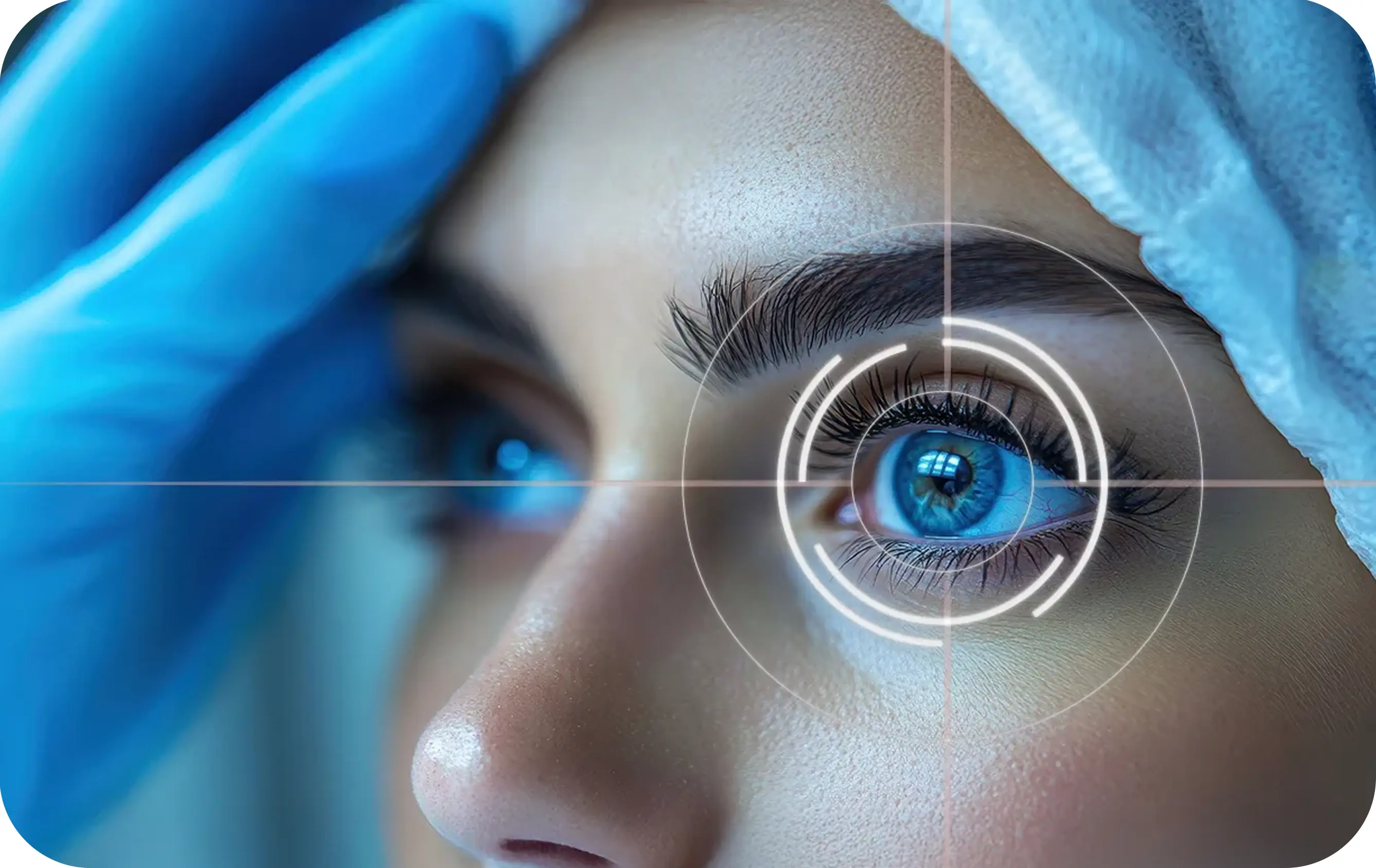
Laser reshaping of the cornea to correct short sight, long sight and astigmatism.

Lens Replacement
Replaces the eye's natural lens with an artificial one to correct vision and prevent cataracts.

Cornea Transplantation
Replaces a cloudy, scarred or misshapen cornea with clear donor tissue to restore sight.
What the Eye Surgeries package includes
-
Hospital and medical care
Your private hospital room, nursing care, pre-operative tests, consultations with your surgeon, anaesthesia, the operation itself and the medication you take home.
-
VIP transfers
A private driver meets you at the airport and takes you between the airport, your hotel and the hospital.
-
Translator and companion
A medical translator at the hospital, and a companion can travel with you at no extra cost.
-
Meals and comfort
Daily meals for you and your companion throughout your stay.
-
24/7 patient coordinator
A dedicated coordinator answers your questions before, during and after your trip, in your language.
Eye Surgeries FAQ
Which eye surgery is right for me?
It depends on your age, your prescription, the thickness and shape of your cornea and the health of the rest of your eye. Laser correction usually suits younger adults with a stable prescription, lens replacement often suits people over 40 or with cataract, and a cornea transplant treats damaged or diseased corneas. The ophthalmologist recommends a treatment after full tests in Istanbul.
Is laser eye surgery painful?
Numbing drops are used, so most people feel pressure rather than pain during treatment. Afterwards your eyes may sting, water or feel gritty for a day or two, and you are given drops and simple pain relief.
Can both eyes be treated on the same day?
Laser correction is usually done on both eyes in one session. Lens replacement and cornea transplant are normally done one eye at a time, with a gap between them.
What should I send before booking?
Send a recent eye examination report and, if you have one, a corneal topography scan, along with your glasses or contact lens prescription and medical history. This helps the team check whether you are likely to be suitable before you travel.
How long do I need to stay in Istanbul?
For laser correction plan for around 3 to 4 days. Lens replacement and cornea transplant usually need about 5 to 7 days so the surgeon can check the eye before you fly.
Will I still need glasses afterwards?
Many people no longer need glasses for most daily activities, but this is not guaranteed. Reading glasses may still be needed with age, and some people need a small top-up treatment or glasses for certain tasks.