What is traditional liposuction?
Liposuction is one of the most widely performed cosmetic operations. It removes fat from areas that stay stubborn despite a healthy diet and regular exercise, giving a smoother and more balanced outline. In traditional liposuction, also called suction-assisted liposuction, the surgeon uses a thin hollow tube, called a cannula, to loosen and suction away fat through small incisions.
Before suction starts, the area is usually filled with a sterile solution containing a local anaesthetic and a medicine that narrows small blood vessels. This tumescent technique reduces bleeding and bruising and makes the fat easier to remove.
Liposuction can treat the abdomen, flanks, back, hips, thighs, buttocks, upper arms, calves, ankles, chest, chin and neck. It is also used as part of breast reduction and male breast reduction (gynaecomastia) surgery.
Who is it suitable for?
Liposuction is a contouring procedure, not a weight loss treatment. It is most suitable if you:
- Are within about 10 kg of your ideal weight and your weight is stable
- Have pockets of fat out of proportion to the rest of your body
- Have firm, elastic skin that can shrink back after fat is removed
- Are in good general health and can safely have anaesthesia
- Do not smoke, or are willing to stop before and after surgery
It does not treat cellulite or loose skin. If your skin has lost its elasticity, your surgeon may suggest combining liposuction with a lift.
Combining liposuction with other procedures
Because the incisions are small, liposuction is often added to other cosmetic operations to refine the result. Common combinations include tummy tuck, breast reduction, thigh lift, arm lift and facelift. Your surgeon will advise how much can safely be done in one session.
How the procedure is done
Traditional liposuction usually takes 1 to 3 hours, depending on the number of areas treated.
Marking
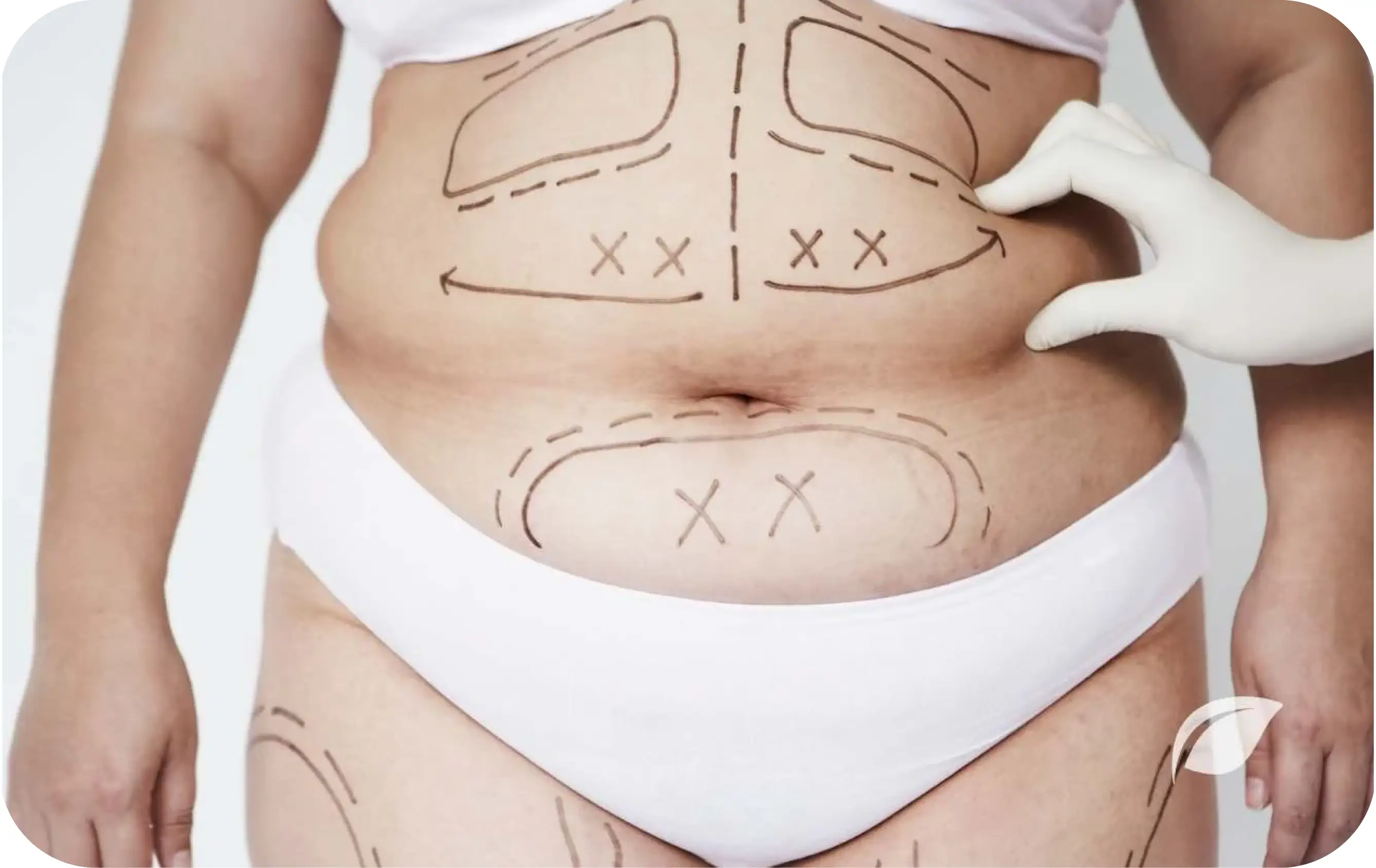
While you stand, the surgeon marks the areas to be treated and takes photographs for your records.
Anaesthesia
Small areas can be treated under local anaesthesia, while larger or multiple areas are usually done under general anaesthesia.
Tumescent fluid
Through incisions of a few millimetres, placed in natural creases where possible, the surgeon fills the fatty layer with tumescent solution.
Removing the fat
The cannula is moved back and forth in a controlled way to break up the fat, which is drawn out by a surgical vacuum or syringe. Because fluid is lost along with fat, you receive fluids through a drip during the operation.
Closing
The incisions are closed with small stitches or left to drain. Thin drains are sometimes placed, and you are fitted with a compression garment.
Recovery timeline
- First 24 hours
You may feel sore and tired, and some fluid may leak from the incisions. Your 4-night hospital stay begins and you are encouraged to walk early.
- Week 1
Swelling and bruising are at their peak. You rest in hospital and have a check-up before flying home.
- Weeks 1–2
Most people go back to desk work after one to two weeks. Avoid strenuous activity for at least two weeks.
- Weeks 3–6
Bruising fades, the early swelling eases and your new outline starts to show. Exercise can increase gradually with your surgeon's agreement.
- Months 3–6
The remaining swelling settles and the final shape becomes clear.
Aftercare
- Wear your compression garment as instructed, usually for 4 to 6 weeks
- Avoid saunas, hot baths and strong sun while swelling settles, as heat can make it worse
- Avoid aspirin, ibuprofen and similar medicines for two weeks before and after surgery unless your surgeon advises otherwise
- Drink plenty of water and keep walking
- Keep the incisions clean and dry until they have healed
Risks and side effects
Liposuction is usually well tolerated, but like any surgery it carries risks. Your surgeon will discuss them with you. They include:
- Swelling, bruising and temporary numbness
- Fluid collecting under the skin (seroma)
- Bleeding or infection
- Uneven contours, dents or rippling
- Slow wound healing or small visible scars
- Changes in skin sensation
- Blood clots and, rarely, fat embolism
- Injury to deeper structures such as nerves, blood vessels or muscles, which is rare
- Reactions to anaesthesia
Results
The removed fat cells do not return, so results are long-lasting as long as your weight stays stable. You will see a difference once the early swelling goes down after 2 to 3 weeks, and the final result after 3 to 6 months. Ageing and weight gain can still change your shape over time.
Liposuction in Turkey: your trip
Before you fly
Send photographs of the areas you want treated and your medical history. Stop smoking and drinking alcohol at least two weeks before surgery, stop multivitamins a week before and stop the contraceptive pill about 30 days before, after checking with your doctor. You arrive at the hospital the day before for tests.
In Istanbul
A VIP driver meets you at the airport, and a translator stays with you through consultations, surgery and discharge. A companion can stay with you at no extra cost, and your hospital stay, meals and medication are included.
Back home
Your coordinator stays in touch 24/7 on WhatsApp, follows your swelling and healing and passes any questions to the surgical team.
What the Traditional Liposuction package includes
- VIP transfers from and to Istanbul Airport (IST)
- Fully equipped room in the hospital
- Translation services at the hospital and during follow-up
- Pre-operative testing
- Consultation with your doctors
- Post-operative care and follow-ups for a year
- General anaesthesia
- Special compression garments
- One companion included in the price
- Three meals a day for you and your companion
- Full hospital stay for 4 nights, 5 days
- Aftercare package with a full set of medications to take home
Traditional Liposuction FAQ
Is liposuction a way to lose weight?
No. Liposuction reshapes specific areas by removing stubborn fat, but the amount of weight lost is small. It works best if you are within about 10 kg of your ideal weight and want to improve your shape rather than reduce your size overall.
Which areas can be treated?
Common areas include the abdomen, flanks, back, hips, thighs, buttocks, upper arms, chest, chin and neck. Calves and ankles can also be treated in suitable patients. Several areas can often be done in one session.
Will the fat come back?
The fat cells that are removed do not grow back. However, the remaining fat cells can still enlarge if you gain weight, so keeping a stable weight protects your result.
Can liposuction tighten loose skin?
Only to a small degree. If your skin is loose or overhanging, a tummy tuck, arm lift or thigh lift, often combined with liposuction, will give a better result.
How long do I need to wear the compression garment?
Usually for about 4 to 6 weeks, day and night at first. It reduces swelling and helps the skin settle smoothly over the new shape.
When will I see the final result?
You will see a change once the early swelling eases after 2 to 3 weeks, but the final shape usually appears after 3 to 6 months.
How long should I stay in Istanbul?
Plan for 5 days in Istanbul. Your package includes a full hospital stay of 4 nights, so you recover in a private room with nurses on hand day and night. You have a check-up before you fly home.