In this article
At a glance
- Best for: loose skin running both across and up and down the abdomen after major weight loss
- Price: FDL tummy tuck from £3,450 / €3,950; a full 360° plan is quoted after assessment
- Operation: general anaesthesia, usually 3 to 5 hours, longer for a 360° procedure
- Hospital stay: 4 to 5 nights in a private hospital in Istanbul
- Back to desk work: usually after 3 to 4 weeks
- Final shape: 6 to 12 months
Losing a lot of weight, whether after a gastric sleeve, a bypass, weight-loss injections or years of hard work, changes your body in ways a standard tummy tuck was never designed to fix. When the skin hangs in two directions, and wraps around the flanks and back, a fleur-de-lis (FDL) or 360° tummy tuck is often the operation that finally gives you the shape you worked for.
This guide explains what FDL and 360° mean, who they suit, how the trip to Istanbul works and what recovery really looks like.
What is an FDL tummy tuck?
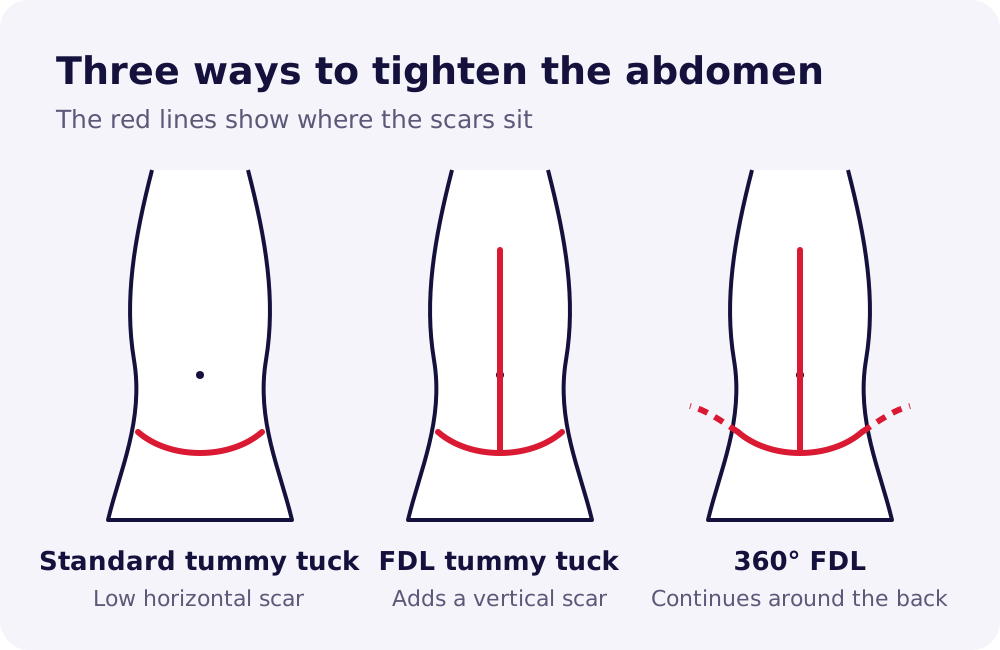
A standard tummy tuck removes skin from the lower abdomen through a horizontal scar low on the tummy. That works well when skin is loose mainly from top to bottom.
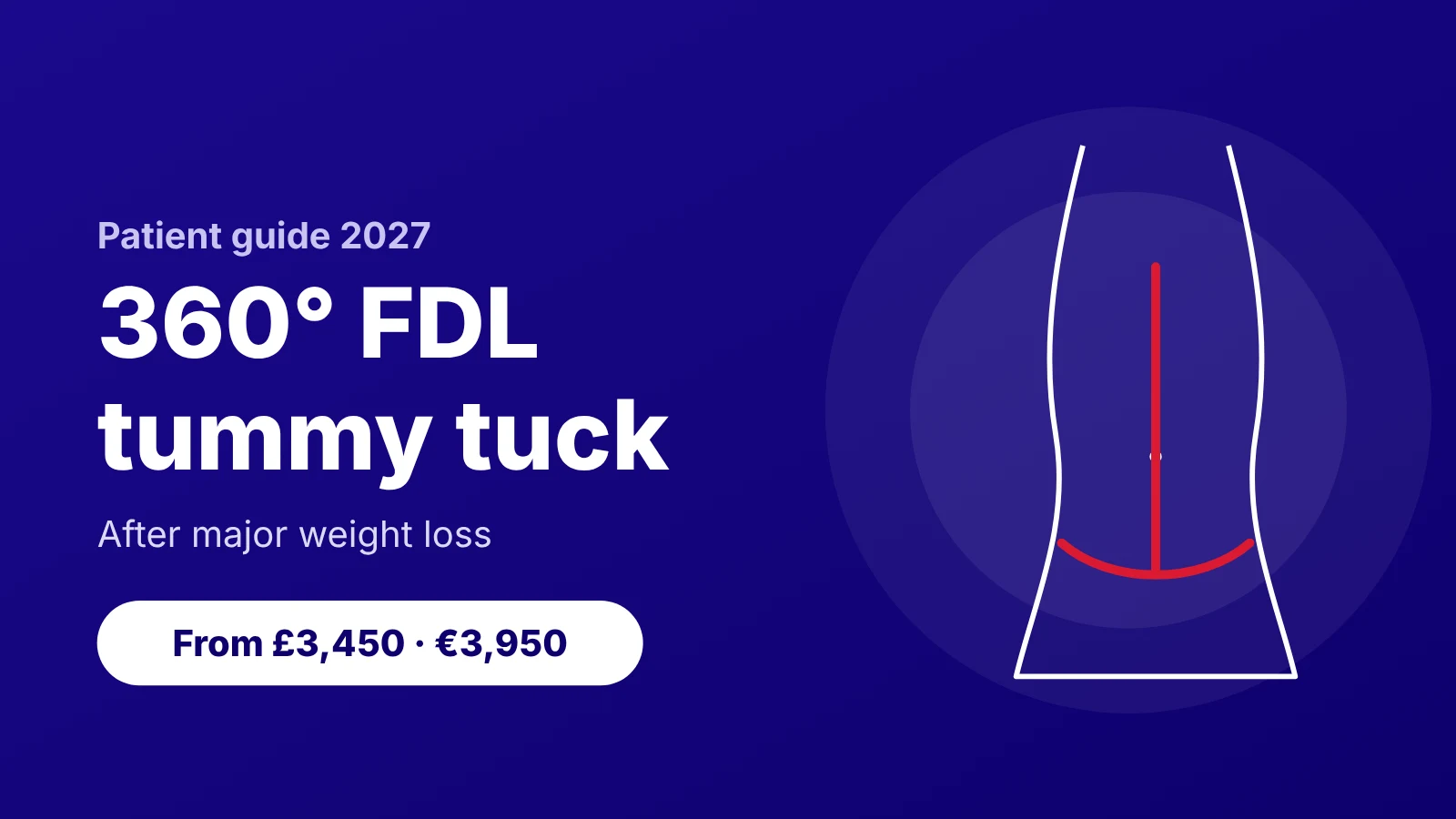
After major weight loss, the abdomen is often loose side to side as well. An FDL tummy tuck adds a vertical incision up the middle of the abdomen, so the surgeon can tighten the waist horizontally as well as vertically. The combined scar looks a little like the fleur-de-lis symbol, which gives the operation its name.
A 360° FDL extends the horizontal incision around the hips and across the lower back. It treats the flanks and back rolls at the same time, and can lift the buttocks slightly. It is a bigger operation, but for many people it is the only way to deal with the whole lower trunk in one stage.
| Standard tummy tuck | FDL tummy tuck | 360° FDL | |
|---|---|---|---|
| Treats | Lower abdomen | Whole abdomen, waist | Abdomen, waist, flanks, back |
| Scars | Low horizontal | Horizontal and vertical | Horizontal all round, plus vertical |
| Best for | Moderate looseness | Skin loose in two directions | Skin loose around the whole trunk |
| Package price | £2,500 / €2,800 | From £3,450 / €3,950 | Quoted after assessment |
Muscle repair (tightening separated abdominal muscles) and liposuction of the flanks can be added to any of these where needed.
Am I a good candidate?
You may be a good candidate if:
- your weight has been stable for at least 6 months, and ideally you are close to your goal
- if you had bariatric surgery, it was usually at least 12 to 18 months ago
- your BMI is ideally around 32 or lower, which lowers the risk of wound problems
- you do not smoke, or can stop for at least 4 to 6 weeks before and after surgery
- your blood tests, including iron and protein levels, are in a healthy range
Operating while you are still losing weight usually means more loose skin later. Low iron or protein after bariatric surgery slows healing, so your surgeon may ask you to improve these first. If you are still using weight-loss injections, tell your surgeon and anaesthetist: you may be asked to pause a dose before surgery.
Your trip to Istanbul
Arrival and planning
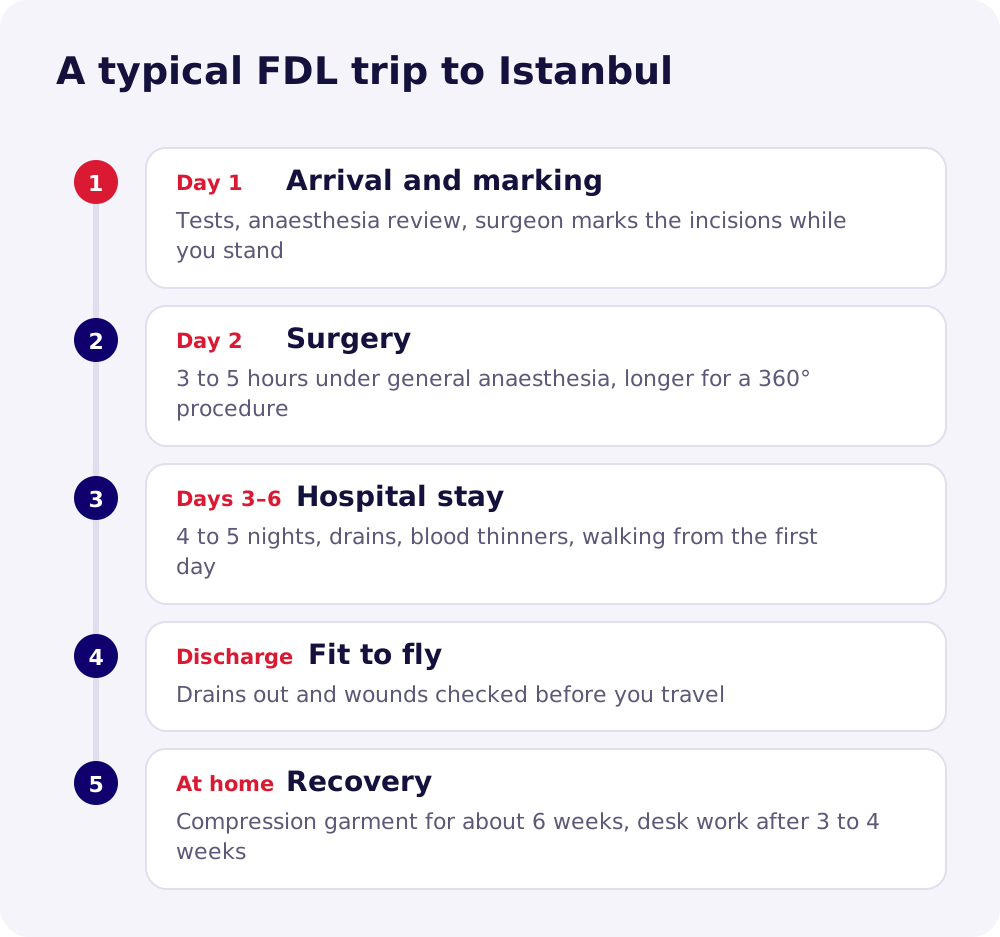
A driver meets you at the airport. You have blood tests and an anaesthesia review, then meet your surgeon. Standing up, your surgeon marks the planned incisions on your skin and shows you exactly where the scars will be.
Surgery and hospital stay
The operation is done under general anaesthesia and usually takes 3 to 5 hours, longer for a 360° procedure. You wake with dressings, a compression binder and usually drains. You stay in hospital for 4 to 5 nights, with pain relief and blood-thinning injections, and nurses help you walk, slightly bent forward, from the first day.
Fit to fly
You fly home once your drains are out and your surgeon has checked your wounds. Your package includes medication, meals, a translator and transfers, and a companion can stay with you at no extra cost. Wear your compression garment and walk the aisle during the flight.
Recovery after an FDL or 360° tummy tuck
| When | What to expect |
|---|---|
| Week 1 | Tightness and soreness, walking slightly bent forward. Drains are removed before you fly. |
| Weeks 2 to 3 | You stand straighter each day. Short walks several times a day. |
| Weeks 3 to 4 | Most people return to desk work. |
| Weeks 6 to 8 | Gradual return to exercise and lifting, as your surgeon advises. Compression garment usually worn for about 6 weeks. |
| Months 6 to 12 | Swelling settles fully, and scars fade from red to pale. |
Plan for help at home for the first two weeks, especially with lifting, shopping and childcare. Eat plenty of protein, keep drinking water and follow your garment and wound-care plan closely; these make a real difference to healing.
Risks and how they are managed
- Seroma. A collection of fluid under the skin is the most common problem after body contouring. Drains and compression reduce it, and small collections can be drained easily.
- Wound healing problems, particularly where the vertical and horizontal scars meet. Not smoking, good nutrition and avoiding strain lower this risk.
- Infection, usually treated with antibiotics.
- Blood clots. Early walking, compression and blood-thinning injections reduce the risk.
- Numbness of the lower abdomen, which often improves over months but may not fully return.
- Visible scars. FDL and 360° scars are long. They are placed to sit under underwear where possible and fade over 12 to 18 months.
Get medical help quickly if you notice
- fever, or redness and heat spreading from a wound
- a wound that opens, or discharges pus
- sudden swelling, or increasing pain
- shortness of breath, chest pain, or a painful swollen leg
Contact your local emergency services first, then let your Booking Surgery coordinator know.
What results can I expect?
Most patients notice a flatter, tighter abdomen and a more defined waist straight away, although swelling hides the final shape for several months. Clothes fit better, skin no longer rubs or folds, and many people say they finally see the result of their weight loss in the mirror.
The trade-off is the scar. Patients who choose FDL or 360° surgery have usually decided that a long, fading scar is a better deal than loose, folding skin. Looking at before-and-after photos of patients with a similar starting point helps you decide.
Loose skin in other areas, such as the arms, thighs or breasts, can be treated in a second stage. Read our guide to loose skin after weight loss for an overview.
How to get started
- Send your details and photos. Include your current weight, your highest weight, any weight-loss surgery and photos of your abdomen from the front, sides and back.
- Get your free plan. Your plastic surgeon recommends standard, FDL or 360° surgery and you receive a written price.
- Book your trip. Your coordinator organises everything from airport to discharge.
Read more on our FDL tummy tuck page.
This guide is general information and does not replace advice from your own doctor or surgeon. Suitability is confirmed after medical assessment. Every operation carries risk, and individual results vary.