In this article
At a glance
- Why it happens: skin stretched over years cannot always shrink back after fast or large weight loss
- When to act: once your weight has been stable for about 6 months
- Main options: tummy tuck, FDL tummy tuck, arm lift, thigh lift, breast lift and facelift
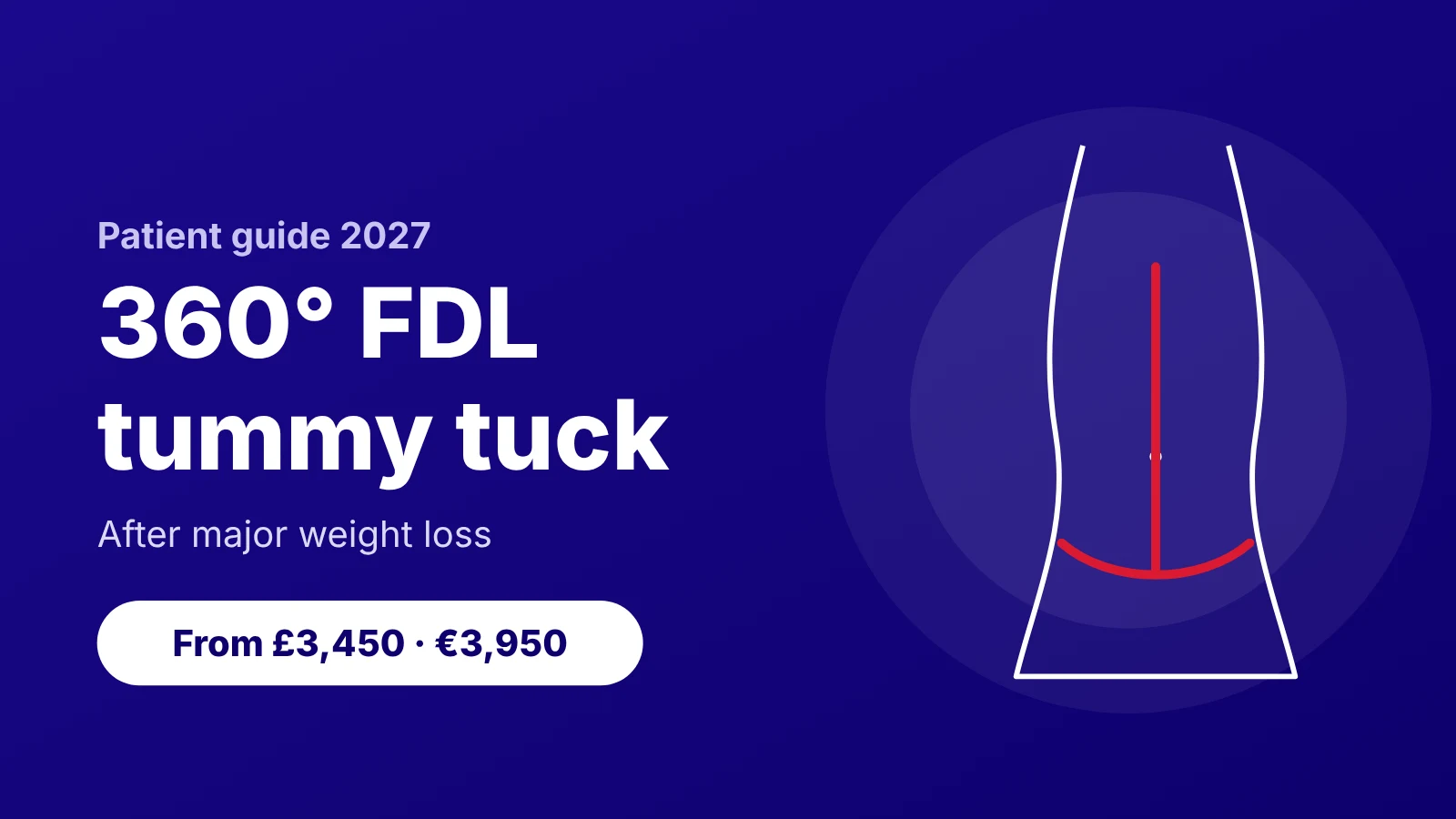
- Prices: tummy tuck packages from £2,500 / €2,800; FDL from £3,450 / €3,950
- Typical hospital stay: 4 to 6 nights in Istanbul, depending on the plan
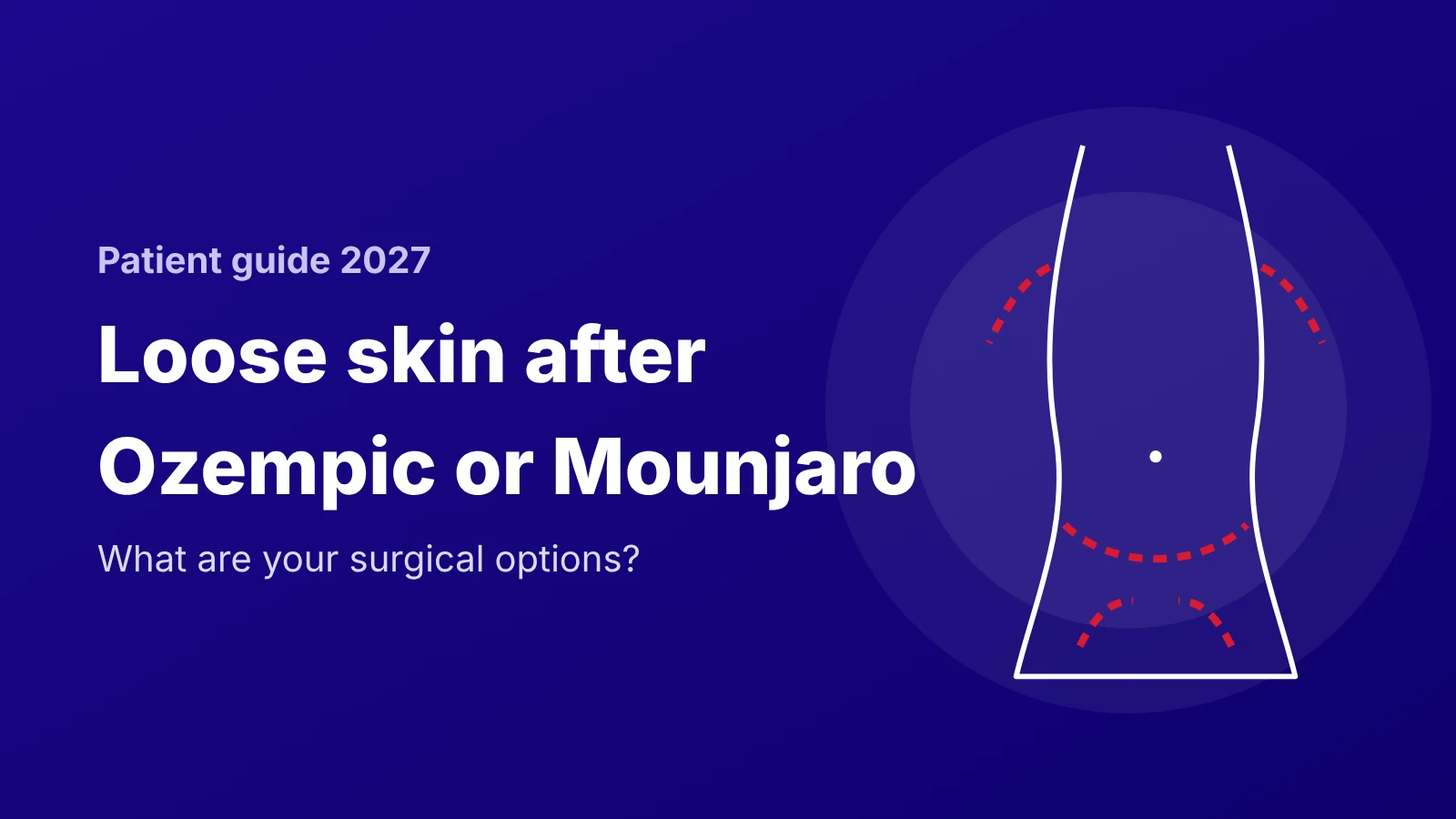
Weight-loss injections such as Ozempic, Wegovy and Mounjaro help many people lose 15 to 20 percent of their body weight or more in about a year. That is life-changing, but it often leaves a problem nobody warned you about: loose skin on the tummy, arms, thighs, breasts, face or neck.
The good news is that loose skin is very treatable. This guide explains why it happens, when to think about surgery, which procedure treats which area, and how a treatment plan in Turkey works.
Why loose skin remains after weight loss
Skin contains collagen and elastin, the fibres that let it stretch and spring back. When skin has been stretched for many years, those fibres are damaged and can no longer contract fully. The faster and larger the weight loss, the less time the skin has to adapt.
Several things make loose skin more likely:
- losing a large amount of weight, especially more than 20 to 25 kg
- losing weight quickly, as is common with injections or bariatric surgery
- age, pregnancy, smoking and years of sun exposure
- genetics, which affect how elastic your skin is
Exercise builds muscle underneath and can improve your shape, but it cannot shrink stretched skin. Creams and most non-surgical treatments only help in mild cases. When the skin hangs or folds, surgery is usually the only option that removes it.
When should you consider surgery?
The best results come when your weight has been stable for about 6 months and you are at, or close to, your goal. If you are still losing weight, new loose skin can appear after surgery.
If you are still taking a weight-loss injection, that does not rule out surgery. Tell your surgeon and anaesthetist which medicine you use, the dose and when you last injected. Because these medicines slow down stomach emptying, you may be asked to pause a dose before surgery or have only fluids the day before, to make anaesthesia safer.
Surgery is a good option to explore if loose skin:
- causes rashes, chafing or infections in skin folds
- makes it hard to exercise or find clothes that fit
- stops you seeing the result of your weight loss
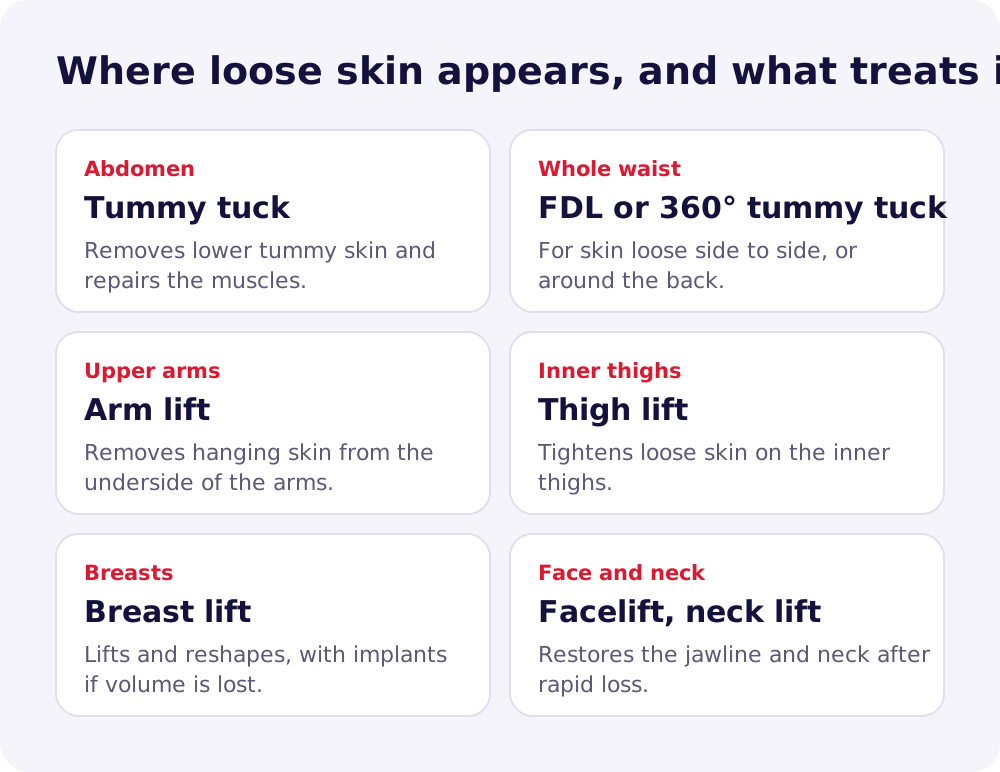
Which procedure treats which area?
| Procedure | Operation time | Hospital stay | Back to desk work |
|---|---|---|---|
| Tummy tuck | 2 to 4 hours | 4 to 5 nights | 2 to 3 weeks |
| FDL tummy tuck | 3 to 5 hours | 4 to 5 nights | 3 to 4 weeks |
| Arm lift | 2 to 3 hours | 4 nights | About 10 days |
| Thigh lift | 2 to 4 hours | 4 nights | 2 to 3 weeks |
| Breast lift | 2 to 3 hours | Set in your plan | 1 to 2 weeks |
| Facelift and neck lift | 3 to 5 hours | 4 nights | 2 to 3 weeks |
Rapid weight loss can also hollow the cheeks and loosen the jawline, sometimes called "Ozempic face". A facelift, neck lift or fat transfer can restore a fresher look; our deep plane facelift guide explains how.
One operation or several stages?
Many people have loose skin in more than one area. Some procedures combine well, such as a tummy tuck with a breast lift. But the longer an operation lasts, the higher the risk of complications such as blood clots, and the harder recovery becomes.
For larger plans, surgeons usually split the work into two or more stages, a few months apart. A common pattern is to treat the abdomen first, then the arms, thighs or breasts in a second trip. Your surgeon will tell you what can safely be done together.
Recovery and scars
All skin-removal surgery leaves scars, because the excess skin has to be cut away. Surgeons place them where clothes or natural creases hide them as much as possible. Scars are red at first and usually fade to pale lines over 12 to 18 months.
Most patients spend 4 to 6 nights in hospital in Istanbul, wear a compression garment for around 6 weeks, and return to desk work after 2 to 4 weeks depending on the procedure. Eating enough protein, not smoking and walking regularly all help your body heal.
Risks to know about
- Seroma, a collection of fluid under the skin, is the most common problem and is usually easy to drain.
- Wound healing problems, especially where scars meet, are more likely in smokers and people with low protein or iron.
- Infection and blood clots, reduced by antibiotics, compression, blood thinners and early walking.
- Numbness around the scars, which often improves over months.
How a treatment plan in Turkey works
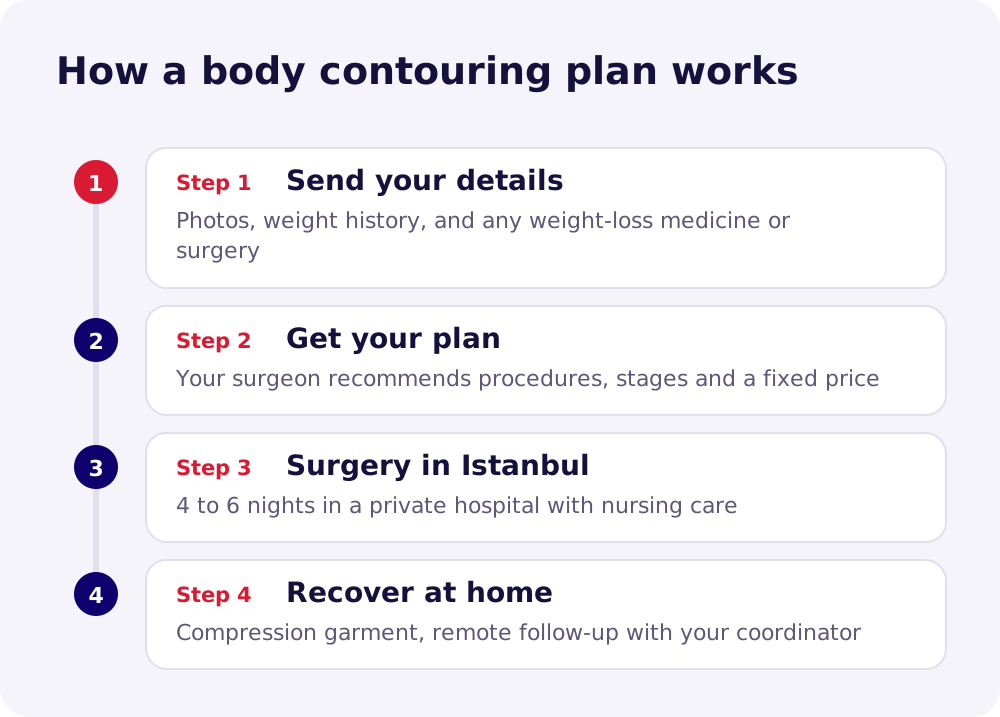
Your package includes your surgeon consultation, tests, surgery, a private hospital room with nursing care, medication, meals for you and a companion, transfers, an English-speaking interpreter and a compression garment. Flights and travel insurance are not included.
When you send your details, include your highest weight, current weight, how long your weight has been stable, any weight-loss medicine or surgery, and clear photos of the areas that bother you. That lets the surgeon give you a realistic plan straight away.
This guide is general information and does not replace advice from your own doctor or surgeon. Do not stop or change a prescribed medicine without speaking to your prescriber. Every operation carries risk, and individual results vary.