In this article
The short answer
- Gastric sleeve: simpler operation, no rerouting, shorter hospital stay. Can start or worsen acid reflux.
- Gastric bypass: slightly more weight loss on average, often improves reflux. More long-term monitoring of vitamins and minerals.
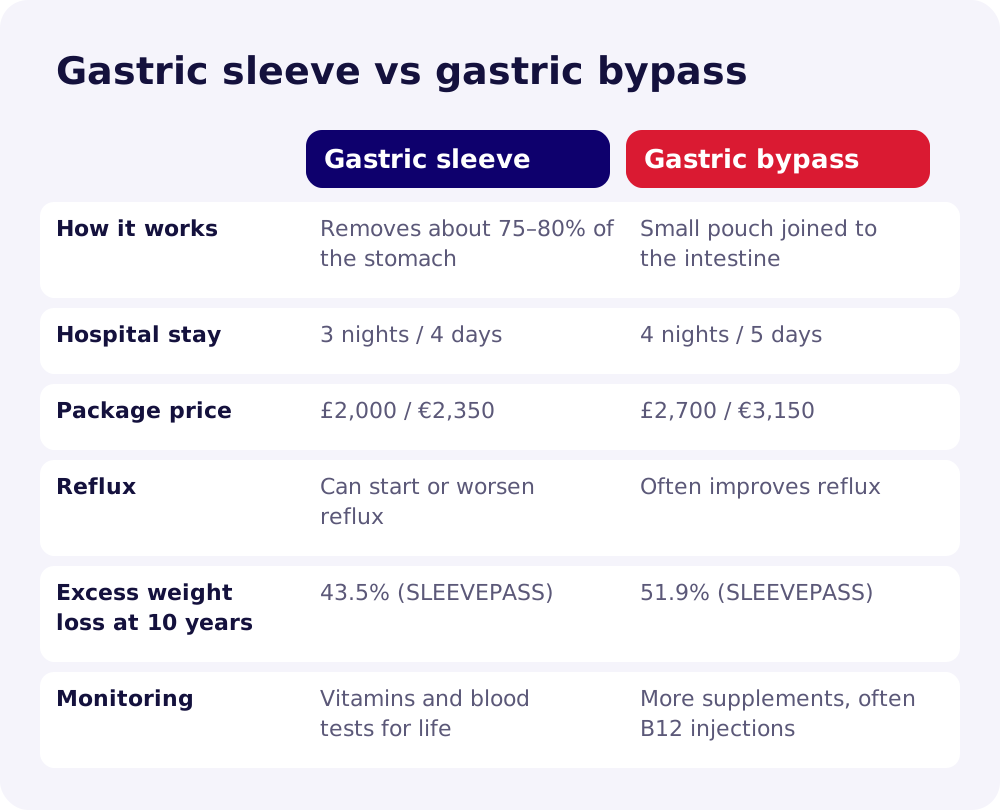
- Prices: sleeve £2,000 / €2,350 with 3 nights in hospital; bypass £2,700 / €3,150 with 4 nights
- The deciding factors: reflux, diabetes, your BMI and your medical history
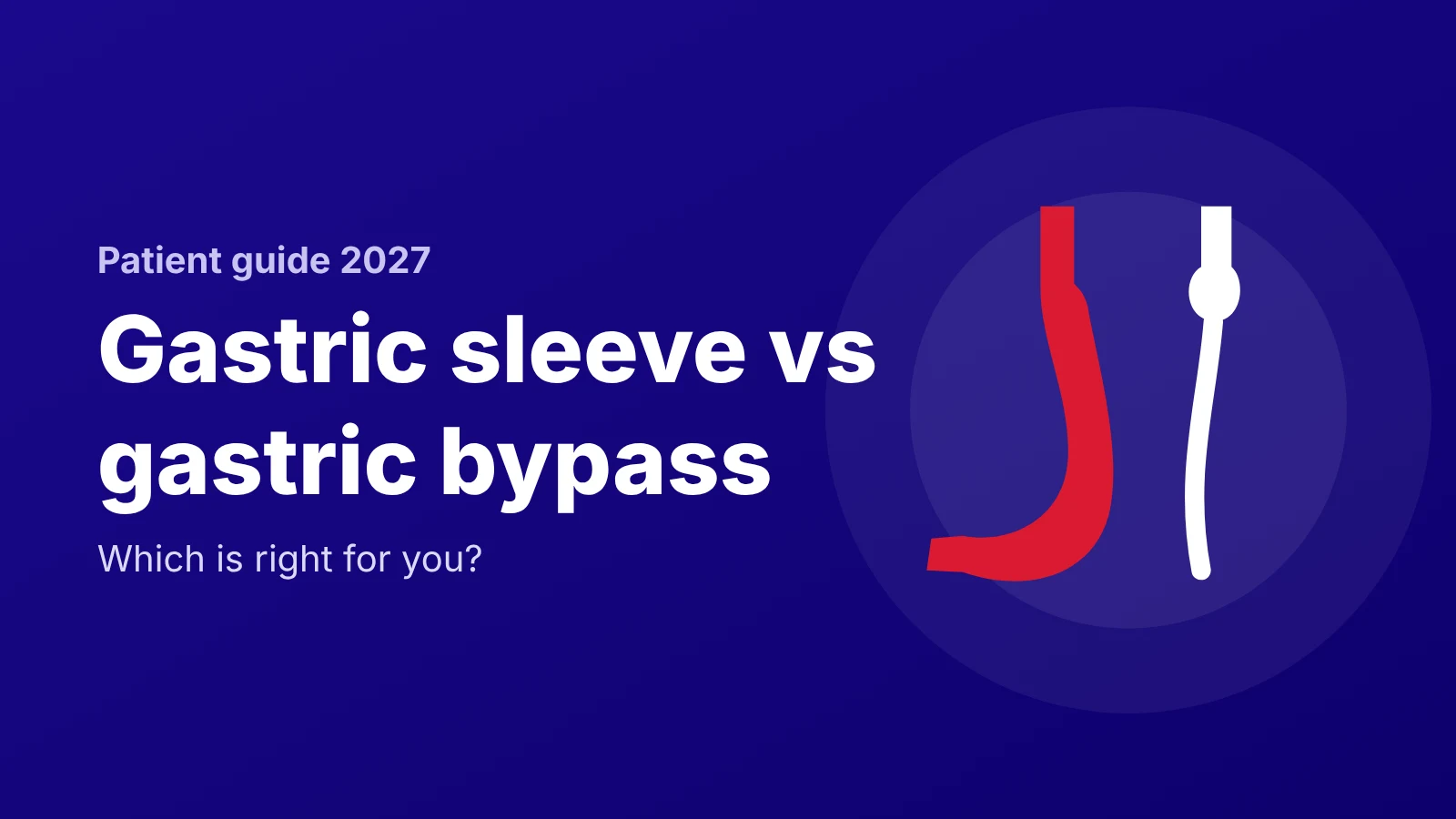
The gastric sleeve and the Roux-en-Y gastric bypass are the two most common weight-loss operations in the world. Both are done by keyhole surgery, both lead to major weight loss, and both are safe in experienced hands. So how do you choose?
This guide compares them side by side, using the best long-term evidence available, so you know what to discuss with your surgeon.
The key differences at a glance
How each operation works
Gastric sleeve
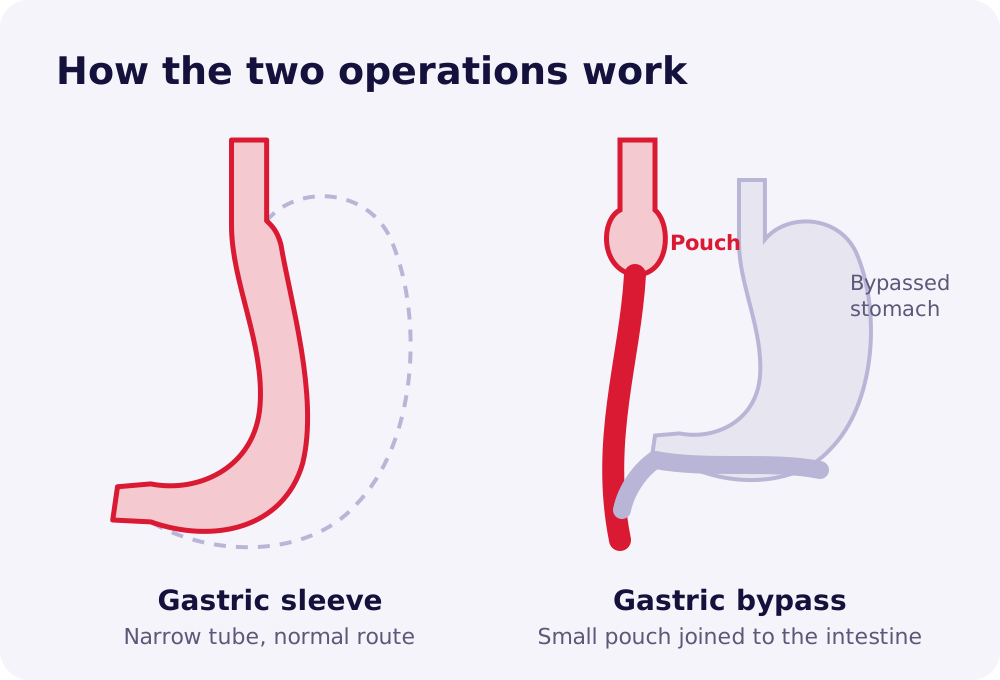
The surgeon removes around 75 to 80 percent of the stomach and leaves a narrow tube. Food follows its normal route. The smaller stomach holds less, and because the removed part produces most of the hunger hormone ghrelin, appetite usually drops sharply.
Roux-en-Y gastric bypass
The surgeon creates a small pouch at the top of the stomach and connects it directly to a lower part of the small intestine. Food bypasses most of the stomach and the first part of the intestine. You feel full quickly, and changes in gut hormones have a strong effect on appetite and blood sugar.
Reflux often decides the choice
If you have frequent heartburn or acid reflux, this is usually the most important factor. A sleeve increases pressure inside the stomach and can make reflux worse or start it for the first time. A bypass diverts acid away from the oesophagus and often improves reflux.
The Finnish SLEEVEPASS trial, which followed patients for 10 years, found that 49 percent of sleeve patients reported worse reflux symptoms, compared with 9 percent after bypass. Inflammation of the oesophagus was found in 31 percent of sleeve patients and 7 percent of bypass patients. That is why many surgeons recommend a bypass for people who already have significant reflux.
Weight loss and diabetes
Both operations lead to large weight loss. In SLEEVEPASS, after 10 years, sleeve patients kept off an average of 43.5 percent of their excess weight and bypass patients 51.9 percent. In practical terms, a bypass gives slightly more weight loss on average, but many sleeve patients do just as well.
For type 2 diabetes, both operations can lead to remission. In the same trial, remission rates at 10 years were 26 percent after sleeve and 33 percent after bypass, a difference that was not statistically significant. If you have diabetes that is hard to control, your surgeon may still lean towards a bypass.
Recovery compared
| Gastric sleeve | Gastric bypass | |
|---|---|---|
| Operation time | Usually 1 to 2 hours | Usually 2 to 3 hours |
| Hospital stay | 3 nights / 4 days | 4 nights / 5 days |
| Back to desk work | 1 to 2 weeks | 2 to 3 weeks |
| Diet stages | Liquids to normal food over 6 to 8 weeks | Similar, 6 to 8 weeks |
Risks of each operation
Both operations carry the risks of any abdominal surgery, including bleeding, infection and blood clots, and both need lifelong vitamins.
Specific to the sleeve: staple-line leak (uncommon), reflux, and the fact that it cannot be reversed. A sleeve can be converted to a bypass later if needed.
Specific to the bypass:
- Dumping syndrome: sweating, dizziness or diarrhoea after sugary or fatty food.
- Marginal ulcers at the join between pouch and intestine, more likely if you smoke or take anti-inflammatory painkillers such as ibuprofen.
- Internal hernia, a rare cause of bowel blockage months or years later.
- Greater risk of deficiencies in iron, vitamin B12, calcium and vitamin D.
- Alcohol is absorbed faster and affects you more strongly.
Lifelong vitamins and blood tests
After either operation you need a daily multivitamin and regular blood tests for life. After a bypass, extra iron, calcium, vitamin D and vitamin B12 are usually needed, often with B12 injections. Taking your supplements every day is the single most important habit for long-term health after surgery.
Which is right for you?
A sleeve is often recommended if you have little or no reflux, prefer a simpler operation with a shorter hospital stay, take medicines that need normal absorption, or want to keep the option of a bypass later.
A bypass is often recommended if you have significant reflux, difficult-to-control type 2 diabetes, a higher BMI, or you have regained weight or developed reflux after a previous sleeve.
Your surgeon makes the final recommendation after reviewing your history, symptoms and test results. If you are also thinking about medication, read gastric sleeve vs Ozempic and Mounjaro.
Your bariatric surgeons
Weight-loss surgery through Booking Surgery is performed by Assoc. Prof. Dr. Ali Tardu and Assoc. Prof. Dr. M. Kağan Katar, both of whom specialise in bariatric and metabolic surgery. Both packages include tests, surgery, a private hospital stay, transfers, an interpreter, a dietitian plan, medication, starter vitamins and 12 months of remote follow-up.
Read more on our gastric sleeve and gastric bypass pages, or see our full gastric sleeve in Turkey guide.
This guide is general information and does not replace advice from your own doctor or surgeon. Suitability is confirmed after medical assessment. Every operation carries risk, and individual results vary.