In this article
At a glance
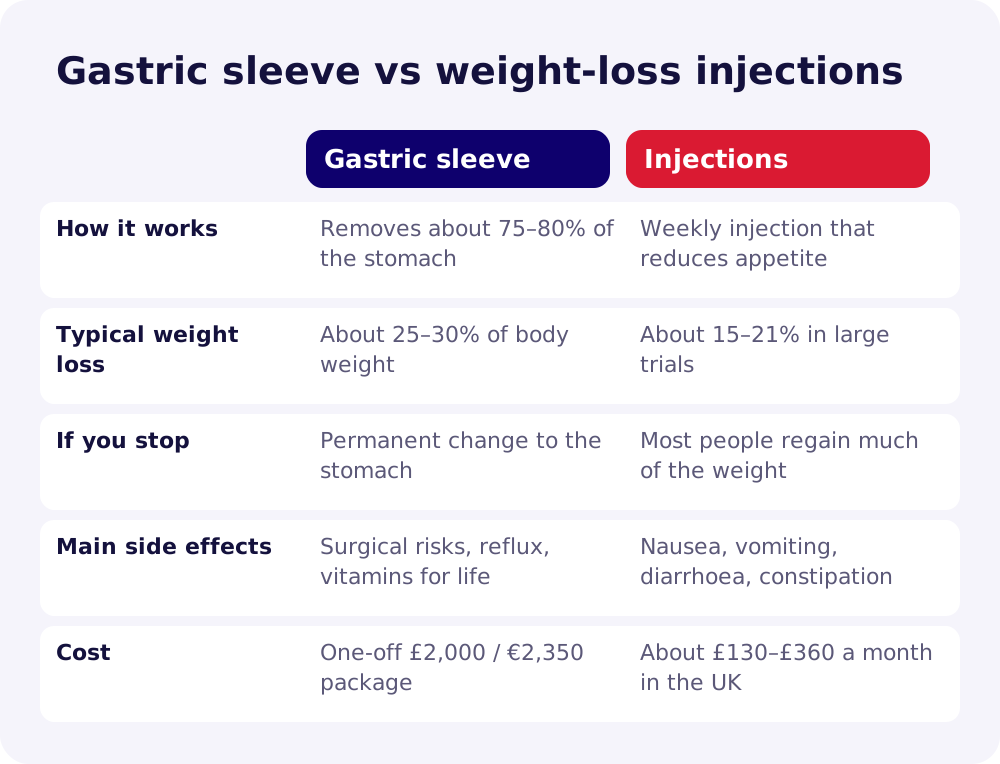
- Weight-loss injections: about 15% (semaglutide) to 21% (tirzepatide) of body weight in large trials, while you keep taking them
- Gastric sleeve: often around 25 to 30% of body weight at 12 to 18 months
- After stopping injections: most people regain a large part of the weight within a year
- Cost: injections are an ongoing monthly cost; a sleeve is a one-off £2,000 / €2,350 package plus lifelong vitamins
Weight-loss injections such as Wegovy and Ozempic (semaglutide) and Mounjaro (tirzepatide) have changed how people think about obesity treatment. For the first time, a medicine can produce weight loss that starts to approach surgery. So is a gastric sleeve still worth it?
For many people the honest answer is: it depends on how much weight you need to lose, how long you want to stay on treatment, and how your body responds. This guide compares the two side by side so you can decide what to discuss with your doctor.
The key differences at a glance
How weight-loss injections work
Semaglutide copies a gut hormone called GLP-1. Tirzepatide copies two hormones, GLP-1 and GIP. Both act on the brain's appetite centres and slow the emptying of the stomach, so you feel full sooner and think about food less. They are injected once a week, starting at a low dose that is increased over several months.
Ozempic is licensed for type 2 diabetes. For weight loss, semaglutide is sold as Wegovy, and tirzepatide as Mounjaro. In the UK they are available on the NHS for some patients through specialist services, and privately through online and high-street pharmacies.
How a gastric sleeve works
In a sleeve gastrectomy, the surgeon removes around 75 to 80 percent of the stomach through keyhole surgery. The smaller stomach holds much less food, and because the removed part produces most of the hunger hormone ghrelin, appetite usually drops sharply. It is a one-off operation, with a 3-night hospital stay. Read our full gastric sleeve in Turkey guide for details.
Which leads to more weight loss?
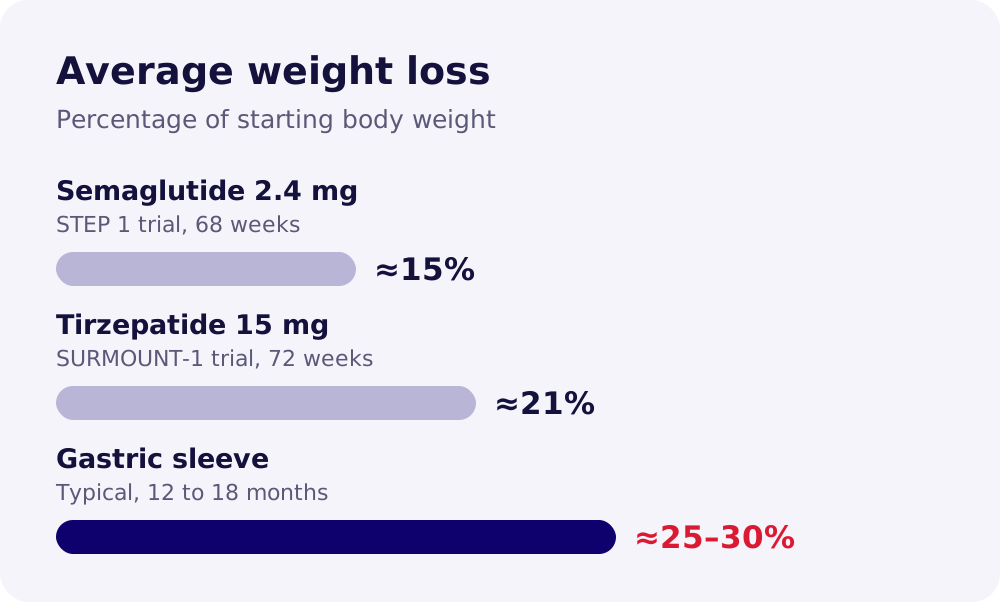
In the large STEP 1 trial, people taking semaglutide 2.4 mg lost on average about 15 percent of their body weight after 68 weeks. In SURMOUNT-1, people on the highest dose of tirzepatide lost about 21 percent after 72 weeks. These are averages: some people lose much more, and some lose very little.
After a gastric sleeve, many people lose around a quarter to a third of their starting weight by 12 to 18 months. For someone starting at a BMI of 45 or 50, that difference can be the gap between "lighter" and "at a healthy weight".
What happens if you stop?
This is the biggest practical difference. Weight-loss injections work while you take them. When people in the STEP 1 extension stopped semaglutide, they regained about two thirds of the weight they had lost within a year. Tirzepatide studies show a similar pattern.
That means injections are usually best thought of as a long-term or lifelong treatment, like a blood pressure medicine. A sleeve is permanent. It does not stop you regaining weight if old habits return, but the change in stomach size and appetite stays with you.
Side effects and risks
| Weight-loss injections | Gastric sleeve | |
|---|---|---|
| Common | Nausea, vomiting, diarrhoea, constipation, especially when the dose goes up | Pain and tiredness after surgery, food intolerance in the early months |
| Less common | Gallstones, pancreatitis, muscle loss if protein is low | Staple-line leak or bleeding, blood clots, acid reflux |
| Long term | Need to continue treatment to keep the weight off | Lifelong vitamins and blood tests, possible reflux |
Neither option is risk-free. Surgery carries a small risk of serious complications in the first weeks; injections carry ongoing side effects for as long as you take them. Both require a good diet with enough protein to protect muscle.
Comparing the cost
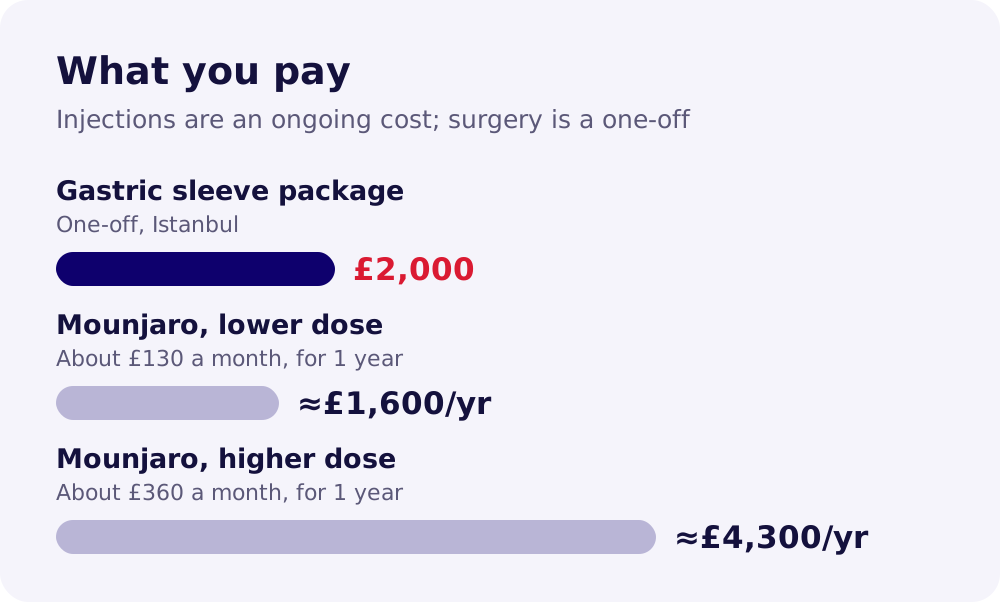
Private prices for Mounjaro in the UK currently range from roughly £130 to £360 a month, depending on the dose and the pharmacy. Over a year that is around £1,600 to £4,300, and over five years it can reach well over £10,000 if you stay on a higher dose.
The Booking Surgery gastric sleeve package costs £2,000 or €2,350 and includes your tests, surgery, 3-night hospital stay, transfers, interpreter, dietitian plan, starter vitamins and 12 months of remote follow-up. You also need to budget for flights, a few hotel nights and long-term vitamins.
Which option might suit you?
Injections may suit you better if you have a lower BMI, need to lose a moderate amount of weight, want to avoid surgery, or want to see how your body responds before deciding on anything permanent.
A sleeve may suit you better if you have a higher BMI, have tried injections and lost too little or could not tolerate them, regained weight after stopping, or would rather have a one-off treatment than lifelong medication.
The two are not mutually exclusive. Some people use injections to lose weight before surgery, and some use them after a sleeve if weight starts to creep back. If you have frequent reflux, a gastric bypass may be a better surgical choice than a sleeve.
If you are on injections and considering surgery
Tell your surgeon and anaesthetist exactly which medicine you take, the dose and the day you last injected. Because these medicines slow stomach emptying, you may be asked to pause a dose before surgery or follow a liquid diet the day before, to make anaesthesia safer. Never stop or restart a diabetes medicine without speaking to the doctor who prescribes it.
Get a personal recommendation
Our bariatric surgeons, Assoc. Prof. Dr. Ali Tardu and Assoc. Prof. Dr. M. Kağan Katar, can review your history, including any injections you have used, and tell you honestly whether surgery is likely to help you more.
This guide is general information and does not replace advice from your own doctor. Do not start, stop or change a prescribed medicine without speaking to your prescriber. Every treatment carries risk, and individual results vary.